
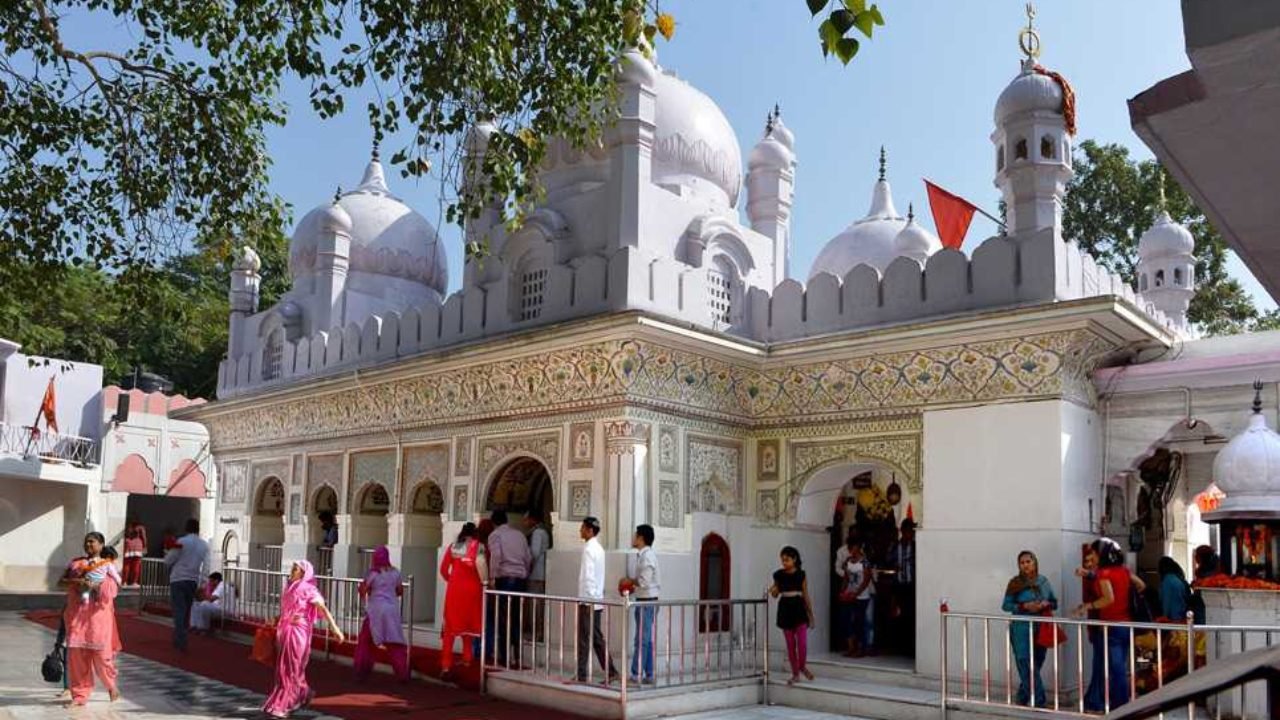
If you live near Chandigarh, you have probably heard someone say, “chalo, Mansa Devi Mandir chalte hain.” And if you are coming from outside, there is a good chance you searched for Mansa Devi Temple on Google and got a mix of results: some about Panchkula, some about Haridwar, a few about Delhi. That is the first thing that confuses most people, because there is more than one temple with this name in India.
This blog is about the Mansa Devi Temple Complex Panchkula Haryana, the one that sits at the foothills of the Shivalik range, just outside Chandigarh. People also call it Mansa Devi Panchkula, Mansa Devi Chandigarh or simply Mata Mansa Devi Temple Panchkula. It is one of the best known temple in Panchkula, and lakhs of devotees visit it every year, mostly in Navratri.
I have gone through the official shrine board website, the Panchkula district website and several travel sources to write this, so that you get one clear answer in one place. You will find the history, the three temples inside the complex, Mansa Devi Mandir timings, aarti times, how to reach, what facilities are available and a few places you can visit nearby. I have also added a short section on the other Maa Mansa Devi temple locations, so you do not end up at the wrong place.
If you are planning the visit with family, keep a relaxed schedule. The complex is big, and there is some walking involved. A good plan is to reach early in the morning, finish darshan, and then spend the rest of the day around Panchkula and Chandigarh.
Different Names for the Same Temple
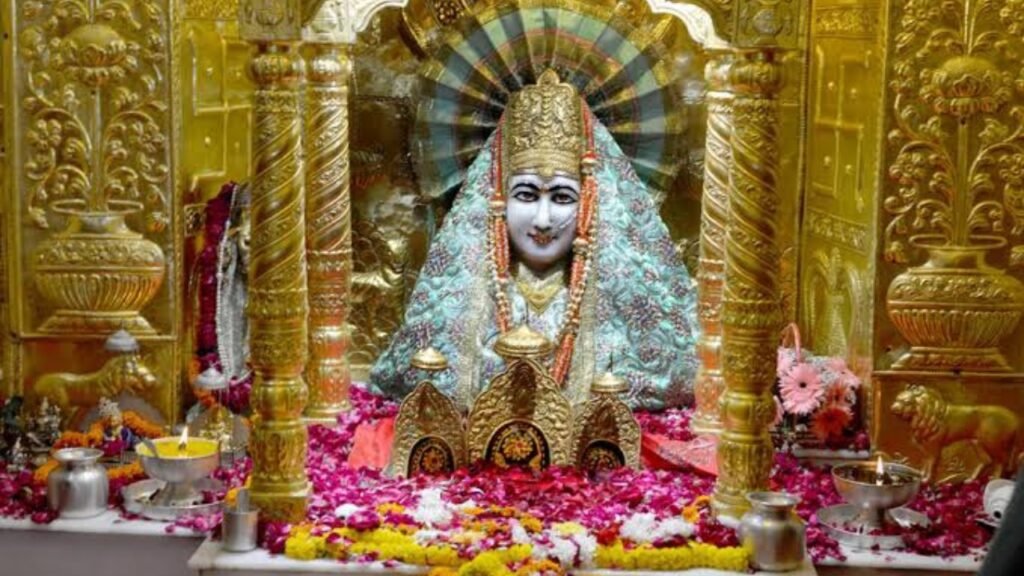
Depending on who you ask, this temple goes by a few names. Here is what you will hear and see online:
- Mansa Devi Mandir Panchkula and Panchkula Mansa Devi Mandir: what most locals say.
- Mansa Mata Mandir, Mansa Mata Temple and Mansa Mata: short names devotees use.
- Mansa Mandir and Mansa Mandir Chandigarh: because the temple is on the edge of Chandigarh.
- Maa Mansa Devi, Mansa Devi Mata and Jai Maa Mansa Devi: the way people say it in prayers and when they greet each other at the temple.
- Manasa Devi, Manasa Devi Temple, Manasa Temple and Mansha Devi: spelling changes you will see on maps and travel sites.
- Mata Temple, Devi Mata Temple and Panchkula Mandir: general names people type when they do not remember the full one.
All of these point to the same place, so do not worry if you see a different spelling on a signboard or a booking page.
Where is Mansa Devi Temple Panchkula and How to Reach
The temple complex is in Panchkula district, right next to Chandigarh, so it is easy to reach from both cities. If you type Mansa Devi temple near me on your phone while you are in the Chandigarh tricity, it will most likely show this one first.
Distances given on the official shrine board website:
- From Chandigarh Railway Station: about 8 km.
- From Panchkula bus stand: about 5 km.
- From Chandigarh bus stand: about 11 km.
- From Chandigarh airport: about 17 km.
How people usually go:
- By car or cab: The easiest option. There is a parking lot near the complex, though some visitors mention it can be a walk from the parking to the main gate on busy days.
- By local bus or auto: Available from Panchkula and Chandigarh.
- By train: Chandigarh is the main railway station. From there take a cab or auto.
Tip: whichever way you go, search Mansa Devi Complex Panchkula in maps and not just “Mansa Devi”; otherwise the map may show another temple with the same name.
Mansa Devi Mandir Timings and Aarti
Timings change with the season. These are the ones listed on mansadevi.org.in, the official website of the shrine board:
- Summer: 4 AM to 10 PM.
- Winter: 5 AM to 9 PM.
- Aarti in summer: Morning around 4:30 to 5 AM, evening around 7 to 7:30 PM.
- Aarti in winter: Morning around 5:30 to 6 AM, evening around 6 to 6:30 PM.
If you are searching for Mansa Devi temple Chandigarh timings or just Mansa Devi timing, these are the same, since the temple is in Panchkula but is usually described as being at Chandigarh’s edge. During Navratri, the schedule can change because of the crowd, so check the website or call before you leave.
History of the Mansa Devi Temple
The history is a mix of what is recorded and what is told by people, so here is both.
- The main temple: Built between 1811 and 1815 by Maharaja Gopal Singh of Manimajra, as per the shrine board website.
- The Patiala temple: About 200 metres from the main temple, built in 1840 by Maharaja Karam Singh of Patiala.
- After independence: When the princely states merged, the royal patronage ended and the temples were neglected for some time. The Haryana government later set up the shrine board to manage the complex properly.
- The story told by locals: A cow used to come to the hilltop every day and give milk at three stones. Those three stones were later identified as the goddess, and the temple was built there.
- Another popular story: King Gopal Das is said to have visited the temple daily with his queen through a cave from his fort.
The goddess here is worshipped as a form of Shakti. Many devotees also pray to her for protection from snake bites, which is one of the traditional beliefs linked to Mansa Devi.
Is Mansa Devi a Shakti Peeth?
This is a common question, and the honest answer is that it depends on which tradition you follow. A lot of sources, including the shrine board, call it a Shakti Peeth or Siddh Peeth. The belief is that a part of Goddess Sati’s head or forehead fell here, and the temple was first known as the temple of Mata Sati.
Other lists of the 51 Shakti Peeths do not always match, so you will see different names in different books. What is common is that devotees treat Mansa Devi Shakti Peeth as an important shrine of North India, and if you are looking for a Shakti Peeth near Chandigarh, this is the one most people go to. Some sources also place it along with Naina Devi, Jwalamukhi, Chintpurni, Brajeshwari, Chamunda Devi and Jayanti Devi as part of the seven Shakti shrines of the region.
What to See Inside the Complex
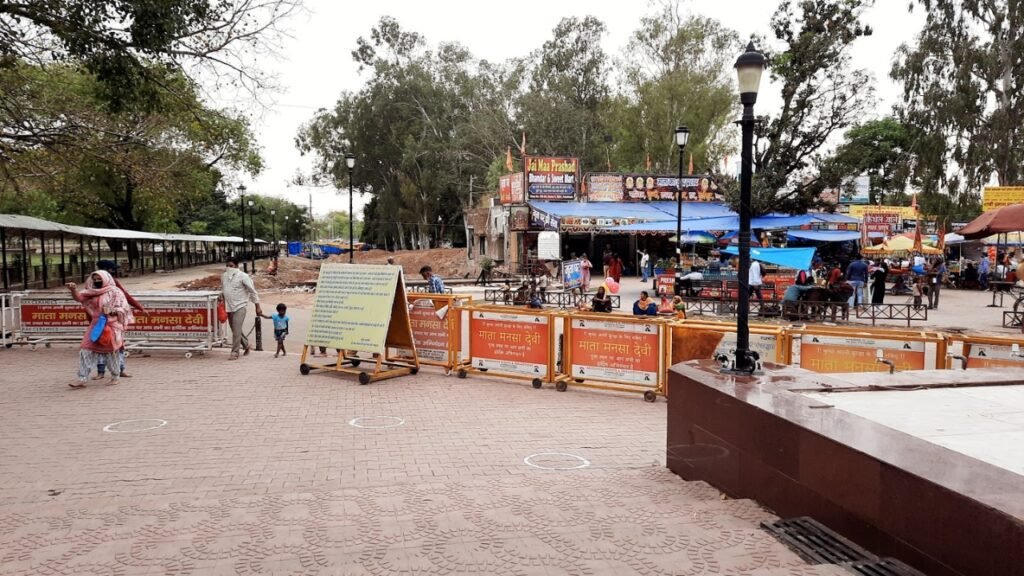
The complex is not just one temple. Here is what you can see:
- Main Mansa Devi temple: The oldest one. It has painted walls and floral designs, around thirty-eight panels, and Mata Mansa Devi is worshipped in the sanctum.
- Patiala temple: Has Hindu features, but with an open parikrama path, which is a little different from the usual temple design.
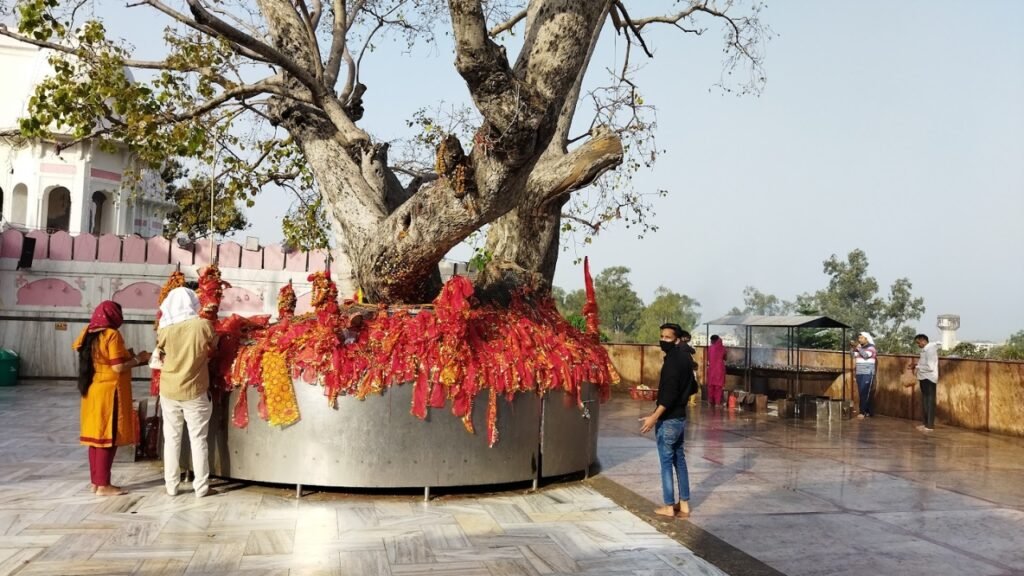
- Sacred tree: Devotees tie holy threads on it and make a wish. This is one of the main things people do here.
- Pond in front of the temple: Some pilgrims take a holy dip there.
- Other shrines in the area: The official site also lists Kalka and Chandi temple pages in its history menu.
Navratri at the Temple
Navratri is the busiest time. Fairs are held here twice a year for nine days, and the crowd goes up to lakhs of devotees in total. If you want a calm darshan, pick a weekday outside Navratri. If you have to go during Navratri, reach very early and keep extra time.
Facilities for Devotees
The shrine board has made some basic arrangements, and it helps to know them in advance:
- A lift for elderly people, patients, pregnant women and divyang devotees, with wheelchairs available.
- A first aid centre and first aid boxes at the temples.
- Lost and found service at the control room.
- Drinking water, a shoe store, prasad counters and CCTV security.
- Online services: Donation, chola booking, prasad and room booking are available through mansadevi.org.in.
Mansa Devi Photos
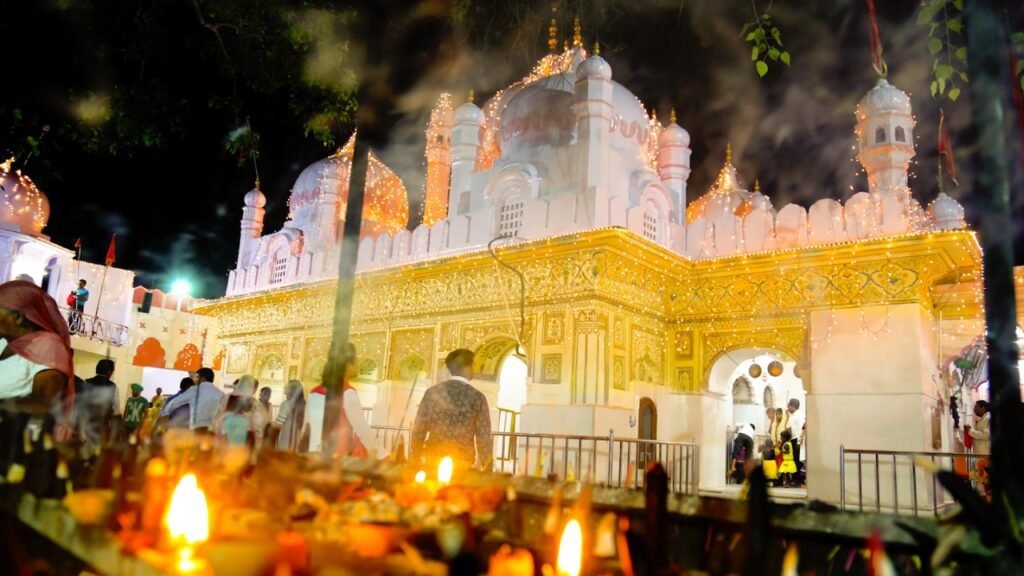
A lot of people search for Mansa Devi image, you will find many on the official website and on Google. If you want to take your own Mansa Devi mandir photo, check the rules at the entrance first, because photography is not allowed in some parts of temple complexes. Outside areas like the gate, the garden side and the open courtyard are usually fine, but the staff will tell you. For a good Maa Mansa Devi image of the exterior, early morning light works best.
Other Mansa Devi Temples: Don’t Get Confused
Because the name is common, here is how to tell the other temples apart:
- Mansa Devi Temple, Haridwar (Uttarakhand): On Bilwa Parvat. You can reach it by a short trek or by the Udan Khatola ropeway. For Mansa Devi temple Haridwar timings, most sources say about 5 AM to 9 PM, though a few list shorter hours, so check on the day. This is the one people mean when they search Mansa Devi temple Uttarakhand.
- Mata Mansa Devi Temple, Singhola, Delhi: In Singhola village of the Narela area. One listing mentions about 12 acres and a pond in the premises. If you are looking for Mata Mansa Devi temple Singhola Delhi, this is the one, and it is far from Panchkula.
- Mansa Devi in Himachal Pradesh: There is a Mansa Mata temple listed at Dharampur on the Kalka–Shimla route, and the Panchkula temple is the closest big one to that side. Search Mansa Devi Himachal Pradesh with the town name to be sure.
- Other places: Mansa Devi temples are also found in Rajasthan, Punjab, West Bengal and Andhra Pradesh.
So if your plan is to visit near Chandigarh, you need the Panchkula one. The Haridwar temple is around 190 km away by road, so it is a separate trip.
Places to Visit Near Mansa Devi Temple
You can add a few nearby stops to your day:
- Chandi Mata Mandir: Another well-known devi mandir near Chandigarh, around 10 km from this temple, so devotees often visit both on the same day.
- Gurudwara Nada Sahib: A short drive on the Panchkula side, good for langar and a quiet stop.
- Pinjore Gardens: Good for an evening walk after darshan.
- Morni Hills: If you have a full extra day.
- Shivjot Resorts, Village Billa (stay option): If you are coming from out of town and want a calm place to stay in Panchkula, this one is near Ramgarh and Nada Sahib Gurudwara. The resort’s website lists a restaurant, rooms, a pool, a spa and event spaces, and Haryana Tourism lists it about 10 km from the bus stand, 12 km from the railway station and 17 km from the airport. You can check details and book your stay at Shivjot Resorts.
Simple Tips for Your Visit
- Go early in the morning. It is cooler and the line is shorter.
- Wear comfortable footwear that is easy to take off, and keep some cash for prasad.
- Carry a small bag only. Large bags can slow down security checks.
- Keep your phone and valuables safe, and be careful with unknown vendors outside, because some visitors say a few of them push hard to sell items.
- For senior citizens, use the lift and wheelchair help.
- Check Navratri dates before you finalise your plan.
Conclusion
The Mansa Devi Temple Complex in Panchkula is an easy visit if you plan it a little. Reach early, check the season’s timings, keep Navratri crowds in mind, and make sure you are going to the Panchkula temple and not one of the others with the same name. Add Chandi Mandir or Nada Sahib if you have time, and you will have a full and peaceful day.
You can also search Mansa Devi mandir image for pictures, and when you reach, say Jai Maa Mansa Devi like everyone else. If you are still asking is Mansa Devi a Shakti Peeth, go once and see the temple yourself, because devotees will have their own answer to share.
If you are travelling from another city and need a comfortable stay in Panchkula, you can look at the rooms and facilities at Shivjot Resorts and book directly at shivjotresorts.com. Jai Mata Di.
FAQs
1. Where is Mansa Devi Temple located?
It is in Mansa Devi Complex, MDC Sector 4, Panchkula, Haryana, just outside Chandigarh.
2. What are the Mansa Devi mandir timings?
In summer it is open from 4 AM to 10 PM, and in winter from 5 AM to 9 PM.
3. Is there an entry fee?
No, there is no entry fee for darshan.
4. Can I book prasad or a room online?
Yes, the shrine board website offers online prasad, donation, chola booking and room booking.
5. How much time should I keep for the visit?
Around 2 hours is enough for darshan. Keep extra time during Navratri or if you want to see the Patiala temple and the complex properly.